


After the murders of Alex Pretti, Renee Good, and the shooting of Julio Cesar Sosa-Celis in Minnesota, state and local authorities were denied access to key evidence needed to investigate the shootings. Sometimes the feds refuse to share evidence because of case-specific investigative needs, but in these cases, the refusal to cooperate came from senior federal officials.
After the initial denial to share evidence, Minnesota state officials filed formal requests - called Touhy requests - to the Department of Homeland Security and the Department of Justice for access. Those formal appeals were largely ignored. The federal policy and practice of non-cooperation has led to state officials filing a federal lawsuit in the DC District.
Each federal agency has Touhy regulations. What are those? “Many federal agencies, including DOJ and DHS, have promulgated regulations governing requests for testimony or documents for use in litigation or investigations in which the agency is not a party. These regulations—commonly known as “Touhy regulations” after the Supreme Court decision, United States ex rel. Touhy v. Ragen (1951), that recognized their general validity—were promulgated under authority derived from the Federal Housekeeping Act, 5 U.S.C. § 301.
Touhy regulations typically set forth the factors that agency officials should consider in evaluating legal demands, including the applicability of relevant legal protections— such as privileges, confidentiality interests, or law enforcement sensitivities—and the need for appropriate disclosure notwithstanding these legal protections. These factors cannot, however, create any new privileges or substantive bases for withholding information.”
DOJ’s Touhy regulations expressly provide that voluntary disclosure of information to state and local law enforcement and prosecutorial agencies is permitted, without the need for any formal demand and without the need for compliance with the Touhy regulations. But the DOJ’s regulations do not authorize withholding merely because requested information contains sensitive law enforcement information. Instead, the regulations allow the DOJ to disclose such information when necessary for the “administration of justice.”
Like DOJ, DHS also permits agency officials to disclose information to state and local law enforcement authorities in conjunction with criminal law enforcement investigations and prosecutions, without needing to comply with the procedural requirements of the agency’s Touhy regulations.
In practice, and in the absence of voluntary law-enforcement-to-law-enforcement disclosure, Touhy requests operate as the mechanism through which state and local authorities generally must request testimony or documents from federal agencies or federal employees for use in legal proceedings.
In the cases of Alex Pretti, Renee Good, and Julio Cesar Sosa-Celis, the government denied or ignored the Touhy requests, so Minnesota is suing.
Some may ask why it took so long to file this lawsuit. In my experience, if you file a lawsuit without first exhausting all the steps necessary to get what you want, courts will often send you back to the drawing board to do your due diligence. That’s why the state took the time to file its formal Touhy requests, then waited a reasonable amount of time for the government to respond. Today, Minnesota decided it had waited long enough. As the lawsuit explains, “This [submitting formal Touhy requests] was done, notwithstanding Defendants’ demonstrated unwillingness to cooperate with Plaintiffs, to ensure that all avenues of redress were pursued.”
The lawsuit claims that the federal government’s failure to share investigative materials interferes with Minnesota’s sovereign duty to investigate whether federal agents violated the law within its borders - a violation of the Tenth Amendment’s protections of the rights afforded a state to exercise police powers.
Minnesota is asking the court for the following relief:
To declare the government’s policy of refusing to share evidence is arbitrary, capricious, not in accordance with law, and in excess of statutory authority
To vacate DHS’s denial of Minnesota’s Touhy requests
To order the government to comply with the Touhy requests by furnishing the evidence, records, and testimony for all three matters
To declare DOJ acted unlawfully when it ignored the state’s Touhy requests
Declare that the government violated the Tenth Amendment
To remedy the Tenth Amendment violations by providing the evidence in all three cases
To award costs and attorneys’ fees
You can read the entire 43-page complaint here.
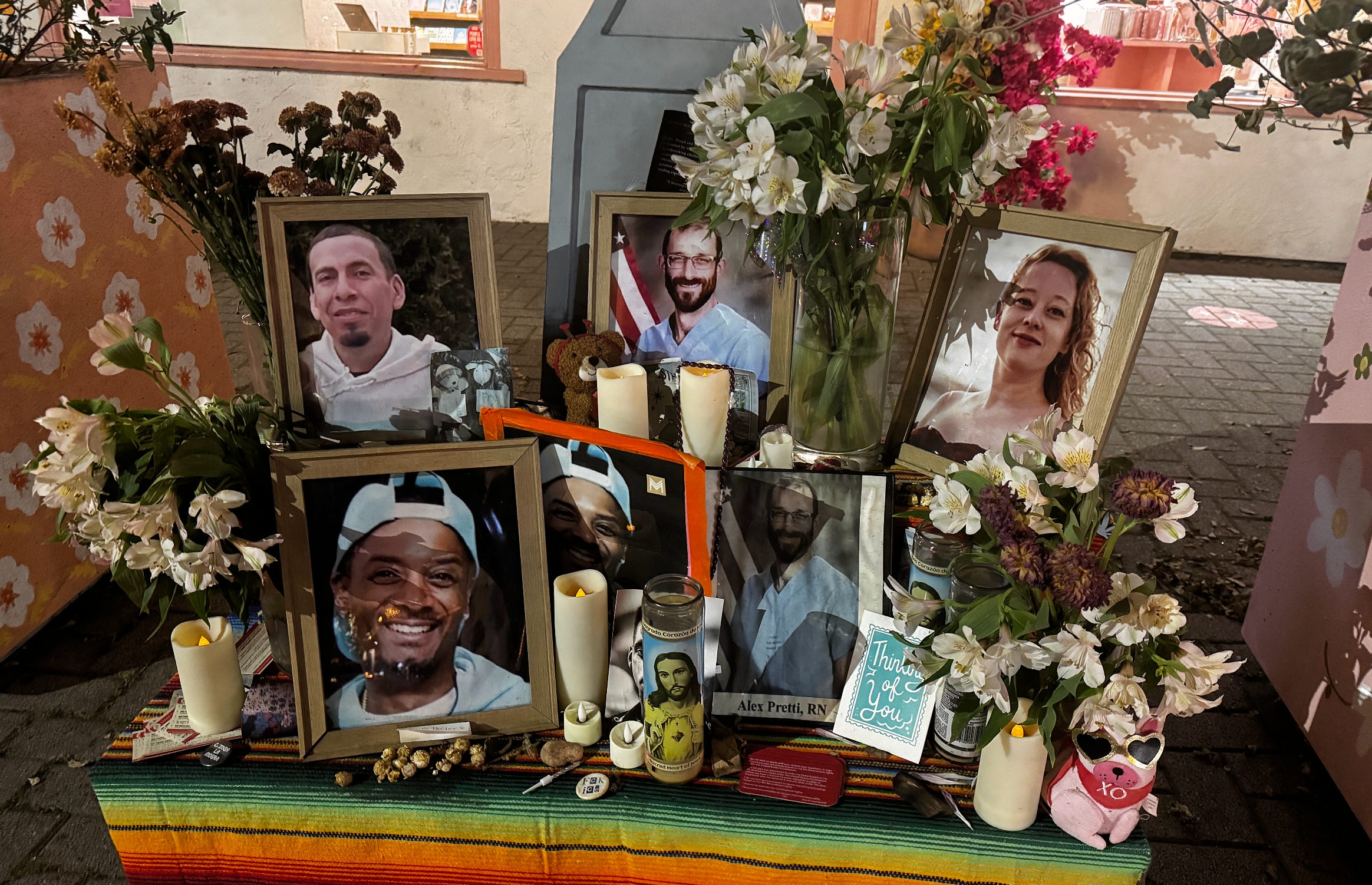
Photo by Allison Gill/MSW Media
Hold ‘em accountable!
Need to hold agent Johnathan David Ross accountable for killing Renee Good.